Wednesday, October 15, 2025

Suggestions on hike of the Property Circle Rates in Delhi

Department of Revenue, Government of NCT of Delhi, Delhi Secretariat, IP Estate, New Delhi – 110002

Subject: Request to Consider Livability and Ground Realities Before Hiking Circle Rates

Respected Sir/Madam,

I am writing to express concern over the proposed revision of circle rates in Delhi and to respectfully urge the government to ensure that ground realities and actual livability conditions are thoroughly considered before implementing any hike.

While revising circle rates to reflect market trends is understandable, it is equally important to assess whether the basic quality of life in each locality justifies such an increase. A rate hike without corresponding improvement in living conditions would be unfair to residents and prospective buyers.

Key factors that must be assessed before any revision include:

  • Air Quality Index (AQI) and local pollution levels

  • Road infrastructure and overall maintenance

  • Waterlogging during rains and poor drainage system

  • Presence of garbage mounds/landfills near residential areas

  • The state of the Yamuna River, especially in nearby localities as well availability of potable drinking water

  • Availability and quality of green spaces and public parks

  • Traffic congestion and average commute times

  • Lack of last-mile connectivity and accessible public transport

  • Waste disposal, sewerage, and sanitation infrastructure

  • Moreover the stamp duty of 7% is too high and must be looked into seriously as people are already paying huge taxes on their income & expenditure.

Without addressing these basic persistent issues, increasing circle rates may not only overburden citizens but also create a disconnect between property valuation and actual livability.

I urge the government to adopt a data-driven, area-specific approach and involve local stakeholders like Resident Welfare Associations (RWAs) in the decision-making process, via a public hearing. This will ensure that the revised rates are fair, transparent, and truly reflective of on-ground realities.

Thanking you,

B S Vohra

President, East Delhi RWAs Joint Front, Krishna Nagar, Delhi 110051

Monday, September 15, 2025

Objection Regarding FPPAC Notification – Request for CAG Audit and Public Hearing

15th September 2025

Secy.,
Delhi Electricity Regulatory Commission
New Delhi

Subject: Objection Regarding FPPAC Notification – Request for CAG Audit and Public Hearing

Dear Sir,

We are deeply concerned and disheartened by the recent notification issued by DERC proposing an automatic FPPAC monthly escalation of up to 10% in power tariffs for Delhi consumers. Such a move is both unprecedented and unjustified.

It is particularly alarming that DERC, an institution established to regulate power tariffs in the public interest, appears to be abdicating its core responsibility. 

Delhi’s consumers are already overburdened with excessive electricity charges — including high fixed charges, inflated sanctioned load costs, numerous surcharges, and an additional 16% Return on Equity (RoE) — all of which cumulatively place a significant financial strain on households.

Furthermore, the outstanding ₹27,200 crores categorized as "regulatory assets" — which continue to accrue heavy carrying costs and interest — raise serious questions about DERC’s oversight. The lack of transparency and accountability in the accumulation of these dues is a matter of grave concern.

Even the court sharply criticized DERC for its "regulatory failure" in allowing this massive amount to accumulate over time. The Supreme Court said it has "serious consequences on all stakeholders, and the ultimate burden is only on the consumer".

Therefore, In the absence of a comprehensive CAG audit and transparent public scrutiny, it is unacceptable from DERC and DISCOMs to continue burdening the people of Delhi — particularly in the context of the existing 49%/51% shareholding arrangement, to avoid the CAG Audit, demands greater regulatory vigilance, not less.

In light of the above, we strongly oppose this proposed automatic tariff escalation and place the following demands:

1. An immediate and comprehensive CAG audit of all Delhi DISCOMs.

2. A public hearing to be held, allowing direct engagement with stakeholders on the issues outlined above.

We urge DERC to act in the public interest and restore faith in the regulatory process. We await your prompt response on this matter.

Sincerely,

B S Vohra
President
EAST DELHI RWAs JOINT FRONT
Krishna Nagar, Delhi – 110051
Email: rwabhagidari@yahoo.in

Cc to Power Minister Delhi

Friday, August 22, 2025

Expressing concern over the matter, environmentalist BS Vohra on Tuesday told ETV Bharat that ETPs are vital for environmental conservation by treating industrial wastewater before it's released into nature.

 Expressing concern over the matter, environmentalist BS Vohra on Tuesday told ETV Bharat that ETPs are vital for environmental conservation by treating industrial wastewater before it's released into nature.

ETV BHARAT STORY:

Nearly 1,900 Industries Operating Without ETPs, Reveals MoEFCC Data


New Delhi: Around 1,900 industries are operating without effluent treatment plants (ETPs) across the country, data issued by the Union Ministry of Environment, Forest and Climate Change (MoEFCC) shows.

As per Indian laws, industries that generate wastewater, especially those with hazardous or high pollutant loads, are legally required to install ETPs, which are essential for industries to adhere to environmental regulations by processing wastewater before its release.

The Central Pollution Control Board (CPCB) mandates ETPs for all industries in the Red Category, which includes 17 highly polluting sectors like textiles, tanneries, pharmaceuticals, paper, chemicals, refineries, and distilleries.

In addition, many industries (moderately polluting) in the Orange Category, such as food processing, dyeing units, and metal finishing, also require ETPs based on effluent characteristics and local regulations.

According to the MoEFCC data, the total number of industries operating without ETPs across the country stands at 1,898. Out of these, Assam records the highest number, 795, followed by Gujarat, 366 and Haryana, 273.

There are a total of 69,854 industries which require ETP as identified by State Pollution Control Boards (SPCBs)/Pollution Control Committees (PCCs), out of which 67,956 industries have functional ETPs, as per the Ministry.

Action as deemed fit for the industries without ETP and non-complying with the standards has been taken by concerned SPCBs/PCCs as per the provisions of environmental laws, the data says.

Expressing concern over the matter, environmentalist BS Vohra on Tuesday told ETV Bharat that ETPs are vital for environmental conservation by treating industrial wastewater before it's released into nature.

"They help prevent water pollution by removing harmful chemicals and toxins, protecting rivers, lakes and groundwater. ETPs also safeguard aquatic life and public health by reducing contamination and disease risks. Additionally, they enable industries to reuse treated water, conserving freshwater resources. By ensuring compliance with environmental laws, ETPs support sustainable industrial practices and national initiatives like Namami Gange," Vohra added.

Environmentalist BS Vohra said Yamuna River is ecologically dead, largely due to the unchecked discharge of untreated industrial and domestic waste.
Environmentalist BS Vohra said Yamuna River is ecologically dead, largely due to the unchecked discharge of untreated industrial and domestic waste. (IANS)


He said, overall, ETPs play a key role in reducing pollution, conserving water, and promoting a cleaner, healthier environment.

The environmental expert asserted that the Yamuna River in Delhi is ecologically dead, largely due to the unchecked discharge of untreated industrial and domestic waste. Despite decades of government programs like the Yamuna Action Plan and Namami Gange, pollution levels remain critical, with zero dissolved oxygen, making it uninhabitable for aquatic life.

"Illegal dumping by industries and poor enforcement by agencies like the Delhi Pollution Control Committee (DPCC) have exacerbated the crisis. Delays in establishing effluent and Sewage Treatment Plants (STPs) reflect administrative failure. Without strict regulation, real-time monitoring, and political will, the Yamuna will continue to deteriorate, posing serious environmental and public health risks," he said.

Vohra said, "To address the 1,898 industries lacking mandatory ETPs, the government must enforce strict compliance with environmental laws. This includes imposing fines, shutting down defaulters, and conducting regular inspections. Real-time monitoring and public disclosure of violators will enhance accountability. Financial incentives and support should be offered to smaller industries to set up ETPs or join Common Effluent Treatment Plants (CETPs)."

According to Vohra, strengthening the capacity and accountability of pollution control boards, along with involving third-party audits, is crucial. A combined approach of regulation, technology, and transparency is essential to protect waterbodies and public health, he added.

BS Vohra, an environmental expert, said GIM has the potential to improve air quality by increasing forest cover across the country, but.....

 ETV BHARAT STORY:

Green India Mission Leads To Increased Forest Cover, But Question Over Long-Term Impact Lingers


Green India Mission Leads To Increased Forest Cover, But Question Over Long-Term Impact Lingers

New Delhi: The Green India Mission (GIM) had a substantial impact on the overall enhancement of forest and tree cover in India, the Union Ministry of Environment, Forest and Climate Change (MoEFCC) said.

Being implemented by the MoEFCC since FY2015-16, GIM is among the eight missions specified in the National Action Plan on Climate Change to safeguard, rehabilitate, and improve forest cover while addressing climate change through plantation initiatives in both forest and non-forest areas in the selected landscapes through Joint Forest Management Committees (JFMCs).

Notably, an amount of Rs 909.82 crore has been released to 17 states and a union territory for the creation of plantation/eco-restoration over an area of 15,5130 hectares.

India's forest cover has increased from approximately 7,94,245 sq km to 8,27,357 sq km, representing a net increase of about 3,31,12 sq km, as per the data issued by the MoEFCC. These gains are attributable to various afforestation and restoration initiatives, including GIM carried out at both state and Central levels, it said.

In states like Madhya Pradesh, the implementation of GIM activities commenced in 2018-19. To date, Rs 123.26 crore have been released for taking up afforestation/eco-restoration activities in 32,831 hectares under different sub-missions of the GIM. Afforestation activities have been undertaken in Katni and Panna districts through various schemes and implementing agencies. Under the Working Plan Implementation scheme, afforestation is being carried out on forest land in Katni, North Panna, and South Panna Forest Divisions.

To ensure the survival rate and growth, monitoring of plantations under the GIM is carried out through a multi-layered approach involving both state and Central level mechanisms. States/union territories conduct annual physical verification of plantation sites to assess the survival rate of saplings and document reasons for any observed mortality.

The state forest department takes corrective interventions, including focused maintenance drives, to address site-specific challenges regarding survival rate. As part of their annual progress reports, states submit digital files and geo-tagged photographs of plantation sites to the MoEFCC for centralised verification and monitoring.

It may be mentioned that the MoEFCC has undertaken initiatives to raise awareness and encourage participation of local communities, such as the promotion of the "Ek Ped Maa Ke Naam" campaign to foster emotional and community connection to tree planting.

Environmental Expert's View

BS Vohra, an environmental expert, said GIM has the potential to improve air quality by increasing forest cover across the country. "The GIM has the potential to improve air quality by increasing forest cover, which helps absorb pollutants and produce oxygen. However, its actual impact on controlling air pollution has been limited. Implementation has been slow, with minimal focus on urban areas where pollution is most severe. Moreover, major pollution sources like vehicular emissions, industrial activity, and stubble burning remain unaddressed by the mission. As a result, despite GIM's efforts, air pollution levels continue to rise," Vohra told ETV Bharat.

Controlling air pollution requires broader, multi-sectoral strategies beyond afforestation alone to achieve meaningful and lasting improvement in air quality, said Vohra, who has been fighting environment-related issues for years in Delhi.

Referring to the GIM, he said, "The GIM aims to enhance forest cover, restore degraded ecosystems, and promote climate resilience. While its objectives are well-intentioned, its impact has been limited, especially in ecologically sensitive regions like Himachal Pradesh and Uttarakhand, where recurring disasters — landslides, floods, and cloudbursts — continue to wreak havoc."

Claiming that the implementation of the mission has faced significant delays, underfunding, and a lack of effective coordination between Central and state authorities, he said, "The actual afforestation and ecological restoration achieved so far fall short of targets, and monitoring mechanisms remain weak. Moreover, the mission has not adequately addressed issues like deforestation from infrastructure projects, unregulated urban expansion, and poor land-use planning, which are major contributors to the ongoing environmental crises in the Himalayan region."

"In both Himachal and Uttarakhand, fragile mountain ecosystems are under intense pressure due to unsustainable development. Roads, hydropower projects, and tourism infrastructure often ignore ecological considerations, leading to increased vulnerability to natural disasters. GIM's limited presence and poor integration with local communities and disaster management systems reduce its effectiveness," Vohra added.

To make a meaningful impact, Vohra said GIM needs better funding, community participation, real-time monitoring, and alignment with broader land and disaster management policies. "There must be a shift from symbolic tree-planting efforts to holistic ecological planning focused on long-term resilience, especially in vulnerable mountain states that are on the frontline of climate change."

For disaster-prone hilly regions of Himachal Pradesh and Uttarakhand, the GIM must evolve from a tree-planting scheme to a holistic ecological resilience strategy, Vohra said. "The mission can play a crucial role in disaster mitigation if it focuses on restoring native forests that stabilise slopes, prevent soil erosion and regulate water flow. Avoiding monoculture plantations and promoting deep-rooted native species is essential for long-term slope stability," he added.

He wants the GIM to be integrated with land-use planning and eco-sensitive zoning to restrict development in vulnerable areas. Bioengineering methods, such as planting grass and shrubs on slopes, can reduce landslide risks. Implementing watershed-based afforestation can control runoff and minimise flash floods, he said.

Vohra asserted that community participation is key as local knowledge and involvement in forest protection enhance the mission's effectiveness, adding green belts along roads, riverbanks, and other infrastructure should be promoted to act as natural barriers against disasters.

"The mission must be aligned with early warning systems and local disaster management plans. By focusing on ecosystem restoration, climate adaptation, and risk reduction, the GIM can significantly contribute to making hill regions safer and more resilient to natural disasters," he added.
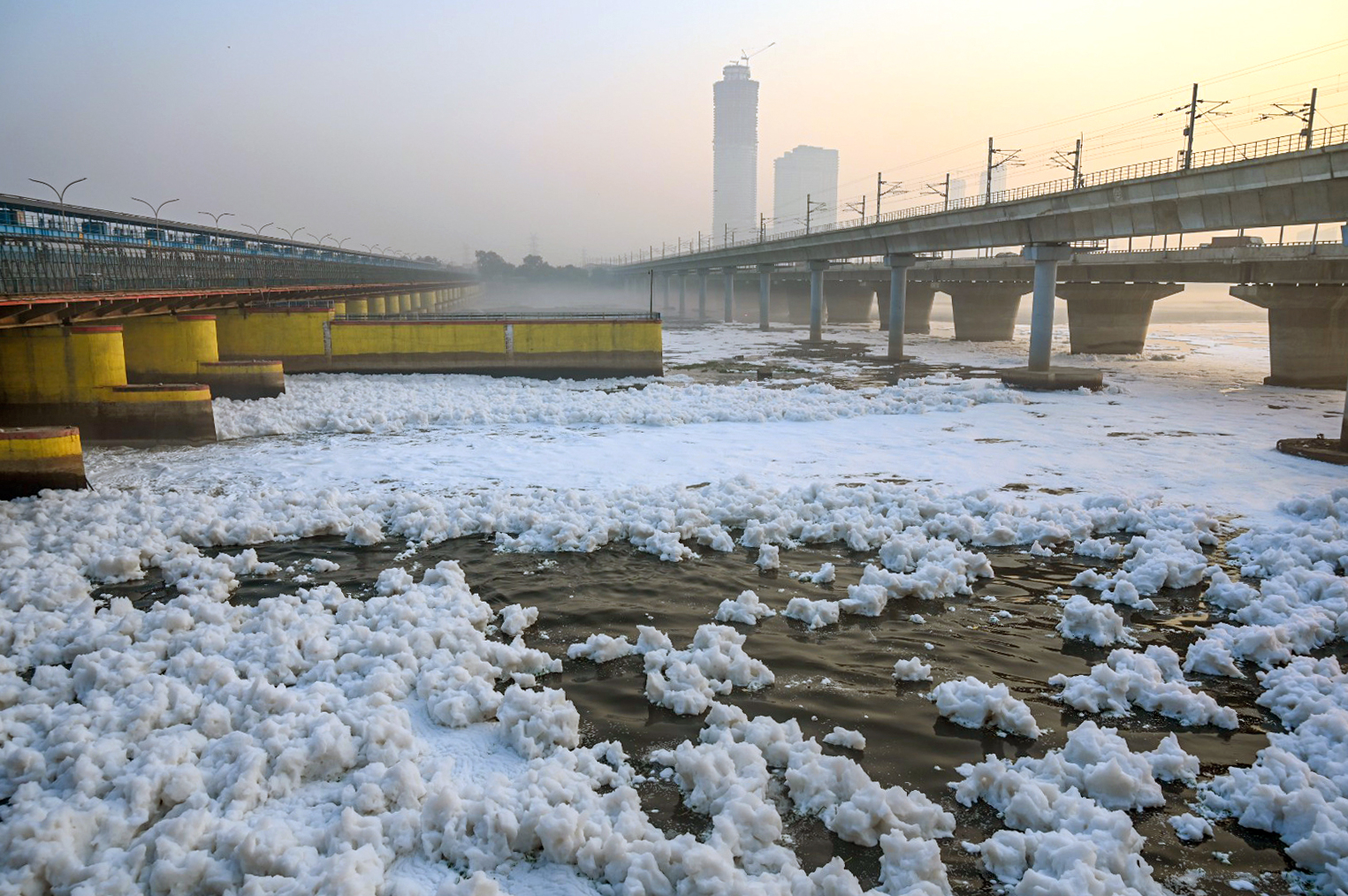

The environmental activist BS Vohra said real-time monitoring of water quality, deployment of surveillance technologies, and transparency through regular reporting are essential

ETV BHARAT STORY:

Monsoon Runoff Deepens River Pollution; Expert Calls for Urgent Government Action
www.etvbharat.com

New Delhi: The monsoon season, typically seen as a time for replenishing water supplies, is exacerbating pollution and causing environmental degradation.

While larger volumes of water may temporarily reduce the concentration of certain pollutants, they also enhance the river's capacity to transport waste, spreading contaminants over wider areas and affecting more communities and ecosystems.

Increased water levels may result in the erosion of riverbanks and the devastation of natural habitats found in riparian zones. It also poses a considerable risk to human life.

Notably, several rivers, including the Ganga and Yamuna, have already been struggling with the issue of pollution. Cleaning/rejuvenation of rivers is a continuous and dynamic process. As per the last report of the Central Pollution Control Board(CPCB) of 2022 on pollution assessment of rivers in the country based on water quality monitoring results, the polluted river stretches stood at 311.

Expressing concern over the matter, an environmental activist emphasised that the Central government must adopt a comprehensive and proactive approach to address this issue.

Speaking to ETV Bharat, BS Vohra said, "The increasing water levels in Indian rivers, particularly the Yamuna, may seem beneficial for replenishing water resources, but they often worsen pollution and environmental degradation. Heavy rainfall and frequent flooding contribute significantly to this problem."

He said runoff from urban, industrial, and agricultural areas carries a mix of pollutants—sewage, chemicals, plastics, and fertilisers—into rivers. This sudden influx deteriorates water quality and increases the biological oxygen demand (BOD), which can deplete oxygen levels and threaten aquatic life.

"Additionally, rising water levels can erode riverbanks and destroy natural habitats along riparian zones. This not only displaces wildlife but also disrupts breeding cycles and food chains, leading to long-term ecological imbalances. Nutrient-rich runoff may also trigger algal blooms, further choking aquatic systems and rendering the water unfit for human or animal use," the environmental activist said.

He said the rising water levels in Indian rivers, particularly during Monsoon seasons, are intensifying pollution and posing a serious threat to human health, ecosystems, and livelihoods. To effectively address this crisis, the central government must adopt a comprehensive and proactive approach.

Suggesting measures to address this issue, Vohra said, "Firstly, strengthening waste management is crucial. This includes upgrading sewage treatment plants, ensuring proper segregation and disposal of waste, and strictly regulating industrial effluents. Zero liquid discharge norms must be enforced for polluting industries, along with strict penalties for violations. Secondly, flood and stormwater management systems should be enhanced to prevent runoff of untreated waste into rivers. Creating green infrastructure and implementing floodplain zoning can help mitigate further damage."

Monday, June 23, 2025

Must follow the Blackstone's Ratio before scrapping / refusing fuel to the 4.9L EOL vehicles in Delhi.

Must follow the Blackstone's Ratio before scrapping / refusing fuel to the 4.9L EOL vehicles in Delhi.

Cameras at Delhi pumps detected ONLY 4.9 lakh 'overaged' vehicles, as well 25 lakh without PUCC, out of the total 3.6 crore vehicles screened at 500 out of 520 petrol pumps in Delhi.

It means in the last 6 to 7 months, only 4.9L EOL vehicles could be detected, which is only 1.36% of the total number of vehicles that have been screened, while those without PUCC are no more than 7%.

Does it mean that all the rest of the so called Polluting EOL vehicles have already been shifted out of Delhi or Scrapped, as they could not be screened at any of the petrol pumps of Delhi ?

Many out of these 4.9L EOL Vehicles may belong to the non active senior citizens of Delhi, who rarely get their vehicles on the road and these vehicles must be in a very good condition & non polluting.

Let's come forward to help and support our senior citizens, the bona-fide voters who contributed for the city their entire life, so that they are not deprived of their only vehicle which is getting punished for no fault.

Therefore, we must test the so called 4.9L EOL vehicles to find out if they are really Polluting or if they require some minor maintenance, before ordering to scrap.

Blackstone's ratio is a legal principle stating that it is better for a guilty person to go free than for an innocent person to be wrongly convicted. The ratio is often expressed as "It is better that ten guilty persons escape than that one innocent suffer". This principle emphasizes the importance of protecting the innocent and minimizing the risk of wrongful convictions in the justice system. 

However, our question are:

1. Delhi does not have 3.6 cr vehicles. So where from the rest of the vehicles have come ? 

2. As per caqm, Delhi has 62 Lakh EOL Vehicles, but why only 4.9L detected ? Where the rest of the vehicles have gone ?

3. Almost 3.6 Cr vehicles keep Polluting Delhi & we want to scrap just 1.36% of it, I.e. 4.9L vehicles to save Delhi from Pollution. Is that a joke ?

B S Vohra

President, East Delhi RWAs Joint Front

Comments received:

Mr Anil Sood from Chetna NGO says,"First of all what is the logic of scarping 10/15 years old cars without removing encroachments from city roads and synchronising traffic signals. With these conditions, even brand new cars would pollute. The institutional polluters are getting away with and common citizens are being punished by fabricated report prepared by IIT Kanpur".

Tuesday, March 4, 2025

Impact of grap 1 level pollution continuously for 5 months on the lives of Delhi people

The impact of GRAP 1 level pollution continuously for 5 months on the lives of Delhi people can be severe.

 Prolonged exposure to poor air quality, with an Air Quality Index (AQI) between 201-300, can lead to *respiratory issues*, such as bronchitis, asthma, and chronic obstructive pulmonary disease (COPD) ¹.

Delhi's poor air quality can also cause *cardiovascular problems*, as particulate matter (PM) can enter the bloodstream, leading to inflammation and damage to blood vessels. Moreover, exposure to poor air quality can lead to *neurological issues*, such as cognitive impairment, anxiety, and depression ¹.

The economic impact of GRAP 1 level pollution cannot be ignored. *Loss of productivity* due to health issues, *increased healthcare costs*, and *reduced tourism* can all take a toll on the city's economy.

To mitigate these effects, the Delhi government has implemented various measures under GRAP, including *dust control efforts*, *prohibiting burning of waste material*, and *restrictions on polluting vehicles* ². However, individual actions, such as wearing masks, reducing outdoor activities, and promoting sustainable practices, are also crucial in minimizing the impact of poor air quality.

Monday, March 3, 2025

Delhi Budget 2025 - How to make Delhi a more liveable & sustainable city ?

To make Delhi a more liveable & sustainable city, here are some of our demands from the DELHI BUDGET, addressing our key issues:

I. Air Pollution

1. *Increase funding for electric vehicle (EV) infrastructure*: Allocate ₹500 crores for setting up EV charging stations and incentivizing EV adoption.

2. *Enhance pollution monitoring and enforcement*: Provide ₹500 crores for installing more air quality monitoring stations and strengthening enforcement mechanisms.

3. *Promote green spaces and urban forestry*: Allocate ₹500 crores for creating new parks, gardens, and green corridors.

II. Garbage Management

1. *Implement waste-to-energy plants*: Provide ₹1,000 crores for setting up waste-to-energy plants to reduce landfill waste.

2. *Enhance waste collection and segregation*: Allocate ₹500 crores for improving waste collection infrastructure and promoting segregation at source.

3. *Create a waste management fund*: Establish a dedicated fund with an initial allocation of ₹500 crores to support waste management initiatives.

III. Waterlogging and Drainage

1. *Upgrade stormwater drainage systems*: Allocate ₹5,000 crores for upgrading and expanding stormwater drainage systems.

2. *Create a flood control fund*: Establish a dedicated fund with an initial allocation of ₹1,000 crores to support flood control measures.

3. *Promote water harvesting and conservation*: Provide ₹500 crores for incentivizing rainwater harvesting and promoting water conservation practices.

IV. Traffic and Congestion

1. *Enhance public transportation*: Allocate ₹5,000 crores for expanding and improving public transportation systems, including buses and metro services.

2. *Promote non-motorized transport*: Provide ₹500 crores for creating cycling and pedestrian-friendly infrastructure.

3. *Implement intelligent traffic management systems*: Allocate ₹500 crores for installing intelligent traffic management systems to optimize traffic flow.

V. Encroachment and Unauthorized Construction

1. *Enhance enforcement mechanisms*: Provide ₹200 crores for strengthening enforcement mechanisms to prevent encroachment and unauthorized construction.

2. *Create a slum redevelopment fund*: Establish a dedicated fund with an initial allocation of ₹ 500 crores to support slum redevelopment initiatives.

VI. Yamuna River Cleaning

1. *Allocate funds for Yamuna cleaning*: Provide ₹500 crores for initiatives aimed at cleaning the Yamuna River, including waste removal and wastewater treatment using STPs at all the designated spots.

2. *Promote sustainable river management practices*: Allocate ₹500 crores for promoting sustainable river management practices, including afforestation on the river banks and biodiversity conservation.

Additional Demands

1. *Increase budget allocation for environmental initiatives*: We Demand an increase in the overall budget allocation for environmental initiatives, aiming for at least 10% of the total budget.

2. *Establish a dedicated environmental department*: We Demand the establishment of a dedicated environmental department to oversee and coordinate environmental initiatives in Delhi.

3. *Promote citizen participation and engagement*: We Demand initiatives to promote citizen participation and RWAs engagement in environmental decision-making processes.

By meeting these demands, Delhi can take a significant step towards becoming a more liveable and sustainable city.

B S Vohra

East Delhi RWAs Joint Front

RWA BHAGIDARI NETWORK

Friday, February 21, 2025

Who is B S Vohra of RWA Bhagidari

GROK - X

B.S. Vohra is a notable figure associated with the Resident Welfare Association (RWA) movement in Delhi, India, particularly known for his leadership in the East Delhi RWAs' Joint Front, a collective representing over 100 RWAs. He has been a vocal advocate for addressing civic issues and empowering RWAs to improve local governance and community welfare.

Vohra served as the president of the Federation of East Delhi RWAs, a role in which he highlighted the significance of initiatives like the "Bhagidari Scheme," introduced by the Sheila Dikshit-led Delhi government in 2003. This scheme aimed to integrate RWAs into the governance process, giving residents a platform to voice concerns about issues such as waterlogging, sanitation, and infrastructure. Vohra praised it as one of the best initiatives for empowering RWAs, though he also noted its decline after the Congress government lost power in 2013.

He has been actively involved in raising awareness about persistent civic problems in East Delhi, such as waterlogging and poor drain management, even suggesting drastic measures like election boycotts to pressure authorities into action. His commentary often reflects a frustration with bureaucratic delays and a call for tangible, time-bound solutions rather than empty promises. Additionally, Vohra has been skeptical of political proposals to enhance RWA powers, pointing out structural issues like the unregulated proliferation of RWAs as a barrier to effective implementation.

The "B.S. Vohra" of RWA Bhagidari appears to be a distinct individual focused on contemporary civic engagement in Delhi. His work underscores a commitment to improving living conditions in East Delhi, often positioning him as a critical voice against both civic authorities and political rhetoric.


East Delhi RWAs Joint Front

The East Delhi RWAs Joint Front is a collective body of Resident Welfare Associations (RWAs) from East Delhi. The front aims to represent the interests of residents and address various civic issues affecting the area.

B S Vohra is the Founder President of East Delhi RWAs Joint Front.

Some of the key objectives of the East Delhi RWAs Joint Front include:

1. Improving civic amenities and infrastructure

2. Addressing issues related to sanitation, water supply, and electricity

3. Enhancing safety and security measures

4. Promoting community development and social welfare initiatives

5. Facilitating dialogue between residents, government agencies, and other stakeholders

By joining forces, the RWAs in East Delhi can amplify their voices, share resources, and work collectively to create a better quality of life for residents.

What do you mean by a Pro-tem speaker ?

A Pro-tem Speaker is a temporary speaker appointed for a limited period to conduct business in the Lok Sabha or state legislative assemblies. The term "Pro-tem" is Latin for "for the time being" ¹.

The Pro-tem Speaker is appointed by the President or Governor and plays a crucial role in administering oaths to new members and overseeing House proceedings until a permanent Speaker is elected ¹ ². Their duties include:

- *Presiding over the first sitting*: of the Lok Sabha or state legislative assemblies

- *Administering the oath*: of office to newly elected members

- *Conducting the floor test*: to prove the government's majority

- *Holding the vote*: to elect the Speaker and Deputy Speaker

The office of the Pro-tem Speaker ceases to exist once the new Speaker of the House is chosen ¹.