Monday, December 8, 2025

500 से 999 और उस के भी ऊपर वाला AQI किस केटेगरी में आता है ?

 CPCB के मानकों के अनुसार, शून्य से 50 के बीच AQI ‘अच्छा’, 51 से 100 ‘संतोषजनक’, 101 से 200 ‘मध्यम’, 201 से 300 ‘खराब’, 301 से 400 ‘बहुत खराब’ और 401 से 500 के बीच एक्यूआई ‘गंभीर’ माना जाता है। 

लेकिन 500 से 999 और उस के भी ऊपर वाला AQI किस केटेगरी में आता है ?

B S Vohra

East Delhi RWAs Joint Front;

Delhi RWAs Pollution Control Committee (DRPCC)


Sunday, December 7, 2025

Delhi RWAs Pollution Control Committee (DRPCC) Formed to Tackle Capital’s Worsening Air Crisis

PRESS RELEASE

Delhi RWAs Pollution Control Committee (DRPCC) Formed to Tackle Capital’s Worsening Air Crisis

In a decisive move to confront Delhi’s escalating air pollution emergency, B. S. Vohra, an Environment Activist, & President of the East Delhi RWAs Joint Front, as well Convener of the RWA Bhagidari Network, has announced the formation of the Delhi RWAs Pollution Control Committee (DRPCC).

Vohra stated that the new committee has been established to address the crisis far more seriously and systematically than it has been so far.

“Despite the ongoing efforts of CAQM, CPCB, and DPCC, why does Delhi’s air quality continue to deteriorate year after year?” he asked. “Does this mean their actions are ineffective, or merely symbolic, lacking real impact?”

Highlighting the stark difference between past achievements and today’s grim reality, Vohra noted:

“In 2010, Delhi successfully hosted the Commonwealth Games. But in 2025, even the BCCI has opted to skip the Under-23 tournament due to pollution concerns.”

He added that the crisis has now reached a point where doctors are advising residents to relocate, and courts have shifted to virtual hearings to safeguard public health.

“Every year, thousands suffer from life-threatening medical conditions linked to pollution, yet authorities still fail to enforce strong, protective measures,” Vohra said.

Concluding with a powerful message, he posed a critical question that reflects the city’s growing frustration:

“Is there no one in the system who can be held accountable for this disaster?”

Vohra added that like-minded RWAs, domain experts, and citizen groups will be brought into the committee, strengthening a collective and sustained movement to save Delhi from the growing threat of air pollution.

By:

DELHI RWAs POLLUTION CONTROL COMMITTEE (DRPCC) 🙏👍💯😭

Saturday, December 6, 2025

How the Air Pollution levels keep worsening in the national capital city DELHI ?

The worsening air pollution in Delhi, despite the efforts of organizations like the Commission for Air Quality Management (CAQM), Central Pollution Control Board (CPCB), and Delhi Pollution Control Committee (DPCC), is a complex issue with multiple contributing factors. Here's a breakdown of some of the key reasons:

1. Vehicular Emissions

Number of Vehicles: The sheer volume of vehicles on the roads is a major contributor. Delhi has one of the highest numbers of vehicles in the country. Even with stricter emission norms and initiatives like the odd-even scheme, the number of vehicles continues to rise.

Diesel Trucks: Delhi serves as a major transportation hub, and a significant amount of pollution is caused by heavy diesel trucks passing through the city. Diesel engines emit large amounts of particulate matter (PM), nitrogen oxides (NOx), and other harmful gases.

2. Construction and Development

Construction Dust: With rapid urbanization, construction work is constantly happening in Delhi. Dust from construction sites is a significant contributor to air pollution, especially particulate matter (PM10 and PM2.5), which is harmful to health.

Infrastructure Projects: Large-scale infrastructure projects, like the Delhi Metro expansion, flyovers, and housing complexes, often lead to an increase in dust and emissions during their construction phases.

3. Burning of Crop Residue (Stubble Burning)

Neighboring States: A significant portion of Delhi's air pollution during the winter months (October-November) is driven by the burning of crop residues in neighboring states like Punjab, Haryana, and Uttar Pradesh. While efforts have been made to incentivize farmers to stop burning stubble, this practice continues due to economic and logistical constraints.

4. Industrial Emissions

Unregulated Industries: Despite efforts to regulate industrial pollution, many small and medium-sized industries around Delhi continue to operate with outdated, inefficient equipment, emitting large quantities of pollutants.

Power Plants and Boilers: Many coal-powered plants and boilers continue to contribute significantly to the pollution levels in and around the city.

5. Weather and Geography

Temperature Inversion: In winter, Delhi experiences temperature inversion, where a layer of warmer air traps cooler air near the surface. This phenomenon prevents pollutants from dispersing, causing them to accumulate and intensify air pollution.

Wind Patterns: The wind direction and speed during certain months can concentrate pollution in the city. Additionally, the local topography can trap pollutants, exacerbating the situation.

6. Firecrackers and Festivities

Diwali and Other Festivals: Every year, during festivals like Diwali, the bursting of firecrackers results in a sharp increase in air pollution, particularly in the form of particulate matter (PM2.5 and PM10). Despite public awareness campaigns, the practice continues to be widespread.

7. Waste Management Issues

Open Burning of Waste: The burning of waste, including plastic and other materials in landfills or on roadsides, is a common practice in Delhi. This adds to the toxic mix of pollutants in the air.

Garbage Piles: Inefficient waste management leads to the accumulation of garbage, which, when burnt, contributes to the city's poor air quality.

8. Insufficient Enforcement of Regulations

Weak Implementation: While there are many laws and regulations in place (e.g., restricting the use of stubble burning, encouraging cleaner fuels, or limiting construction dust), enforcement remains a challenge. There are instances of non-compliance by industries, construction sites, and even individuals, which contribute to the pollution.

Political and Bureaucratic Challenges: Air pollution is a politically sensitive issue, and different state and central authorities often have conflicting interests or insufficient coordination.

9. Climate Change and Long-term Changes

Increased Frequency of Extreme Events: Climate change is leading to more erratic weather patterns, making certain pollutants more concentrated during specific times of the year (e.g., longer periods of fog and stagnation in winter).

Long-Term Pollution Trends: Many of Delhi's pollution challenges are tied to years of industrialization, urbanization, and unchecked emissions. The long-term effects are difficult to reverse quickly.

10. Public Awareness and Behavioral Challenges

Public Behavior: Many individuals still don't fully understand the severity of the issue or how their actions (e.g., burning leaves, excessive use of private vehicles, improper waste disposal) contribute to pollution.

Lack of Alternative Options: Public transportation infrastructure, although improving, is still inadequate in many areas. People rely on private cars, contributing to traffic emissions. Moreover, affordable electric vehicle (EV) infrastructure is still in the developmental stage.

Efforts Being Made

Despite these challenges, several steps are being taken:

Graded Response Action Plan (GRAP): A framework to tackle air pollution with increasing severity depending on the pollution levels.

Air Quality Index (AQI) Monitoring: Real-time monitoring and reporting systems to provide timely information to the public.

Promotion of Electric Vehicles: Incentives to promote EVs and transition to cleaner energy sources.

Public Awareness Campaigns: Continuous campaigns to educate the public about the importance of reducing pollution.

Conclusion

The situation in Delhi is the result of a combination of socio-economic, environmental, and regulatory factors. While there have been improvements in certain areas (such as stricter vehicle emission standards and cleaner energy initiatives), the city is still grappling with pollution because of the complex and interconnected nature of the problem. The road to cleaner air will require stronger enforcement, systemic changes, better coordination among agencies, and more sustainable urban planning, all while balancing economic growth and the welfare of the population.

B S Vohra, Environment Activist, President, East Delhi RWAs Joint Front

Friday, November 28, 2025

दिल्ली का घुटता दम: गंभीर वायु प्रदूषण से बढ़ता खतरा !

दिल्ली में हर वर्ष सर्दियों के मौसम में वायु प्रदूषण एक गंभीर संकट के रूप में सामने आता है। हवा में घुले विषैले प्रदूषक न केवल पर्यावरण को नुकसान पहुँचाते हैं, बल्कि मानव स्वास्थ्य, अर्थव्यवस्था और सामान्य जीवन पर भी गहरा प्रभाव डालते हैं। दिल्ली का एयर क्वालिटी इंडेक्स (AQI) अकसर ‘सीवियर’ श्रेणी में पहुँच जाता है, जो यह दर्शाता है कि हवा में मौजूद कण (PM2.5 और PM10) सुरक्षित स्तर से कई गुना अधिक हैं। यह स्थिति दिल्ली-एनसीआर के करोड़ों लोगों के लिए अत्यंत हानिकारक है।

सबसे पहले स्वास्थ्य पर पड़ने वाले दुष्प्रभावों की बात करें तो वायु प्रदूषण फेफड़ों और हृदय से जुड़ी बीमारियों को बढ़ावा देता है। लगातार प्रदूषित हवा में सांस लेने से खाँसी, सांस फूलना, आंखों में जलन, एलर्जी और अस्थमा जैसी समस्याएँ तेजी से बढ़ती हैं। बच्चों, बुजुर्गों और गर्भवती महिलाओं के लिए यह स्थिति और भी खतरनाक होती है। 

लंबे समय तक ऐसे वातावरण में रहने से फेफड़ों की कार्यक्षमता घट जाती है और हृदय संबंधी रोगों का जोखिम बढ़ जाता है। कई मामलों में गंभीर प्रदूषण का प्रभाव क्रोनिक ऑब्सट्रक्टिव पल्मोनरी डिजीज (COPD) और फेफड़ों के कैंसर तक भी पहुँच सकता है। डॉक्टरों के अनुसार, दिल्ली में शीतकाल के दौरान श्वसन संबंधी मरीजों की संख्या कई गुना बढ़ जाती है, जिससे अस्पतालों पर भी अतिरिक्त दबाव पड़ता है।

दूसरा बड़ा नुकसान पर्यावरण पर पड़ता है। वायु प्रदूषण से पेड़ों की पत्तियाँ समय से पहले झड़ने लगती हैं और पौधों की वृद्धि प्रभावित होती है। हवा में मौजूद सल्फर डाइऑक्साइड और नाइट्रोजन ऑक्साइड जैसे प्रदूषक अम्लीय वर्षा का कारण बनते हैं, जो मिट्टी और जलस्रोतों को भी हानि पहुँचाती है। प्रदूषण की अधिकता से दिल्ली के चारों ओर मौजूद हरियाली पर भी बुरा असर पड़ता है। इसके अलावा, हवा में धुंध और स्मॉग की परत सूर्य की किरणों को रोक देती है, जिससे तापमान में असामान्य बदलाव देखने को मिलता है और मौसम चक्र प्रभावित होता है। यह स्थिति जलवायु परिवर्तन की समस्याओं को और बढ़ा देती है।

वायु प्रदूषण का आर्थिक प्रभाव भी कम नहीं है। बढ़ती बीमारियों के कारण लोगों को इलाज पर अधिक खर्च करना पड़ता है और कई बार कामकाजी दिनों का नुकसान भी होता है। स्कूलों और कार्यालयों को बंद करने की स्थिति पैदा हो जाती है, जिससे शिक्षा और व्यापार दोनों प्रभावित होते हैं। निर्माण कार्यों और वाहन उपयोग पर लगाए गए प्रतिबंधों से व्यवसायिक गतिविधियाँ धीमी पड़ जाती हैं। प्रदूषण के कारण पर्यटकों की संख्या भी घटती है, जो दिल्ली की अर्थव्यवस्था के लिए चिंताजनक है।

अंततः, सामाजिक जीवन भी इस प्रदूषण का शिकार होता है। लोग बाहरी गतिविधियों से बचने लगते हैं, बच्चे मैदानों में खेल नहीं पाते और सामान्य जीवनशैली प्रभावित होती है। मास्क पहनना अनिवार्य हो जाता है और स्वच्छ हवा जैसी बुनियादी आवश्यकता भी एक चुनौती बन जाती है।

संक्षेप में, दिल्ली में गंभीर वायु प्रदूषण स्वास्थ्य, पर्यावरण, अर्थव्यवस्था और समाज—चारों स्तरों पर भारी नुकसान पहुँचाता है। इस समस्या से निपटने के लिए सरकार, उद्योगों और नागरिकों सभी को मिलकर दीर्घकालिक समाधान अपनाने होंगे, जैसे—स्वच्छ ऊर्जा का उपयोग, सार्वजनिक परिवहन को बढ़ावा, वृक्षारोपण और प्रदूषण नियंत्रण नियमों का कड़ाई से पालन। केवल सामूहिक प्रयासों से ही दिल्ली को स्वच्छ और स्वस्थ हवा मिल सकती है।

B S Vohra, Environment Activist President, East Delhi RWAs Joint Front

Saturday, November 15, 2025

What aqi level in Delhi can cause permanent damage of Lungs?

What aqi level in Delhi can cause permanent damage of Lungs?

Here's a clear, safe, and science-based explanation:

AQI Levels and Risk of Permanent Lung Damage

The Air Quality Index (AQI) uses the same health-impact categories worldwide (including Delhi), though Delhi often reaches the highest bands. Permanent lung damage is not tied to a precise AQI number, but the risk increases sharply at very high and prolonged exposures.

Below is the standard interpretation:

AQI LevelCategoryHealth EffectsRisk of Long-Term / Permanent Damage
0–100Good/ModerateMinimalNone expected
101–200Unhealthy for Sensitive GroupsIrritation, reduced lung function (temporary)Long-term exposure can begin affecting children, elderly, and asthmatics
201–300UnhealthyBreathing difficulty for most peopleChronic exposure may cause measurable decline in lung function
301–400Very UnhealthySignificant respiratory distressHigh risk of long-term lung damage, especially with repeated or continuous exposure
401–500+Hazardous / SevereSerious health effects on everyoneProlonged exposure can lead to permanent lung damage, increased risk of COPD, and long-term impairment

So, what AQI level in Delhi can cause permanent lung damage?

➡️ Short-term spikes (even 500+) usually do not cause permanent damage alone, but
➡️ Repeated or long-term exposure to AQI above ~300–400 greatly increases the risk of lasting or permanent lung damage, especially from PM2.5.

Why?

PM2.5 particles (most responsible for Delhi pollution peaks) can:

  • lodge deep inside the alveoli,

  • cause chronic inflammation,

  • reduce lung growth in children,

  • accelerate lung aging,

  • increase lifetime risk of asthma, COPD, and heart disease.

Important note

This information is for general education, not medical diagnosis. If you have symptoms (persistent cough, breathlessness, wheezing), consulting a medical professional is recommended.

B S Vohra, Environment Activist, President, East Delhi RWAs Joint Front

Causes of Day Time severe Air Pollution in Delhi ?

Delhi’s hazardous daytime air pollution results from a combination of human activities and natural factors. The major causes include:


1. Vehicular Emissions

  • High population and rapid growth in vehicle ownership.

  • Traffic congestion leads to idling, increasing emissions.

  • Major pollutants: PM2.5, PM10, NOx, CO, and ozone precursors.


2. Industrial and Power Plant Emissions

  • Factories around Delhi-NCR emit particulate matter, sulfur dioxide (SO₂), and nitrogen oxides (NOx).

  • Brick kilns and small-scale industries often use dirty fuels like coal, wood, and furnace oil.


3. Construction and Road Dust

  • Continuous construction, demolition, and poor dust-control practices release large amounts of PM10.

  • Road dust resuspension due to traffic movement is one of the largest daytime contributors.


4. Biomass Burning Within the City

  • Burning of garbage, wood, and crop waste inside Delhi’s informal settlements contributes to toxic emissions.

  • Open waste burning is a major source of black carbon.


5. Stubble Burning (Seasonal but Severe)

  • Farmers in Punjab, Haryana, and Uttar Pradesh burn rice stubble.

  • Winds carry the smoke to Delhi, dramatically raising PM2.5 levels, especially in late October–November.


6. Atmospheric and Weather Conditions

  • Low wind speed during the day traps pollutants.

  • Temperature inversions can occur even in daytime winter months, preventing vertical dispersion.

  • Strong sunshine triggers photochemical reactions, increasing ground-level ozone.


7. Urban Heat Island Effect

  • Dense built-up areas trap heat, intensifying chemical reactions that form secondary pollutants like ozone and secondary PM2.5.


8. Diesel Generators

  • Commonly used during power cuts in markets, construction sites, and residential complexes.

  • Emit high levels of PM2.5, SO₂, and NOx.


9. Poor Fuel Quality & Waste Disposal Practices

  • Use of substandard fuels in transport and industry.

  • Improper waste disposal leads to open burning, especially during daytime when enforcement is weak.


Summary

Delhi’s hazardous daytime air pollution arises from a mix of local emissions (vehicles, dust, industries), regional sources (crop burning), and weather conditions that trap pollutants and enhance photochemical pollution.

B S Vohra, Environment Activist, President, East Delhi RWAs Joint Front

Why is night AQI worse in Delhi?

How night aqi is higher in Delhi comparing day AQI, even though minimum vehicular emissions and parali fires can't impact only during night ?

There are clear scientific reasons why AQI in Delhi is often higher at night than during the day, even when traffic emissions are low and stubble-burning (“parali”) isn’t occurring at that exact time.

Here’s the explanation, step by step:


🌆 1. Night-time temperature inversion traps pollutants

This is the main reason.

  • After sunset, the ground cools quickly.

  • The air near the surface becomes colder than the air above it.

  • Cold air is heavier and cannot rise - this creates a temperature inversion layer.

  • Pollutants from day sources (vehicles, industry, dust, residual biomass smoke) get trapped near the ground, causing AQI to spike.

During the day:

  • Sunlight heats the ground → warm air rises → vertical mixing occurs.

  • Pollutants disperse upward → AQI appears better.

➡️ Even if emissions are low at night, the inability of pollutants to disperse makes the concentration appear higher.


🌬️ 2. Wind speed is lowest at night

  • Night-time winds tend to calm significantly in plains cities like Delhi.

  • With low or no wind, pollutants accumulate locally.

  • Even residual pollution from the daytime stays close to the surface.

Daytime winds + sunlight = better dispersion.


🏭 3. Continuous emissions (even at lower levels) still accumulate

Even though traffic decreases, these sources continue throughout the night:

  • Waste burning (often done at night)

  • Industrial emissions (not all factories shut down)

  • Construction dust

  • Domestic emissions (heating, cooking, generators)

  • Heavy trucks enter Delhi mostly at night (unless restricted)

Lower emissions + zero dispersion still leads to higher concentration.


🌫️ 4. Higher humidity at night forms secondary particles

At night Delhi’s humidity rises. Higher humidity promotes:

  • Formation of secondary particulate matter (especially PM2.5)

  • Hygroscopic growth of existing particles → they absorb moisture and get “bigger”

  • Fog + particulate interaction → smog

This increases PM2.5 readings even if pollution source is unchanged.


🔥 5. Parali (stubble burning) affects nights more due to wind patterns

Even though fires may occur in the day, their transport to Delhi often peaks at night:

  • Cooler night winds from Punjab/Haryana bring smoke into Delhi.

  • Unable to disperse due to inversion, the smoke accumulates.

So fires don’t have to happen “at night” to worsen night AQI.


🌃 6. Chemical reactions differ between day & night

Daytime sunlight causes photochemical reactions that help break some pollutants (like NOx).
At night:

  • No sunlight → fewer reactions to degrade pollutants.

  • NO₂ builds up because it isn't photolyzed.

  • Ozone decreases at night, affecting secondary particle formation dynamics.

Overall effect → pollution stays in its most concentrated form.


✔️ In summary: Why is night AQI worse in Delhi?

Even with lower emissions, pollutants get trapped, accumulate, grow, and don’t disperse at night due to:

  • Temperature inversion

  • Low wind speed

  • Increased humidity

  • Residual emissions accumulating

  • Transport of pollution from outside Delhi

  • Suppressed chemical breakdown of pollutants

This phenomenon is common in polluted cities worldwide, but Delhi’s geography and winter conditions amplify it dramatically.

B S Vohra, Environment Activist, President- East Delhi RWAs Joint Front

Friday, November 14, 2025

RWAs Advisory on Rising Air Pollution Levels in Delhi


RWAs Advisory on Rising Air Pollution Levels in Delhi

Dear Residents,

With the recent increase in air pollution levels across Delhi, the EDRWAJF urges all residents to take the following precautionary and preventive measures to safeguard their health and contribute to cleaner air in our community.


1. Health & Safety Measures

  • Limit outdoor exposure, especially during early mornings and late evenings when pollution levels are typically higher.

  • Use N95/N99 masks when stepping outdoors.

  • Keep windows and doors closed during peak pollution hours.

  • Use air purifiers, if available, especially for children, elderly individuals, and those with respiratory conditions.

  • Increase indoor ventilation during times when AQI is better (usually afternoon hours).


2. Protecting Vulnerable Groups

  • Ensure that children, senior citizens, pregnant women, and asthma patients avoid prolonged outdoor activities.

  • Keep essential medications (inhalers, nebulizers) readily accessible.


3. Reducing Local Pollution

Residents are requested to actively help reduce emissions in and around the colony:

  • Avoid burning leaves, garbage, or any waste.

  • Encourage carpooling, use of public transport, bicycles, and walking for short distances.

  • Turn off vehicle engines at red lights to prevent idling.

  • Avoid using diesel generators; shift to backup alternatives wherever possible.

  • Support plantation drives and protect existing green cover in the colony.


4. Home & Community-Level Actions

  • Keep household dust levels low by regular wet mopping.

  • Maintain green balconies or indoor plants that improve air quality.

  • Participate in RWA-led awareness sessions and clean-air initiatives.


5. Reporting & Coordination

  • Report any instances of open burning, construction dust, or industrial emissions to the RWA office and local authorities.

  • The EDRWAJF will continue to coordinate with local municipal bodies to ensure:

    • Regular watering of parks and open areas

    • Dust control measures near construction sites

    • Timely waste collection and disposal


6. Stay Informed

  • Residents are advised to regularly check AQI updates from official sources.

  • The RWA will share alerts and updates through WhatsApp groups, notice boards, and email.


Your cooperation is essential in safeguarding the health of our community, with a request to Delhi Government & all the concerned Agencies to come forward to SAVE DELHI, SAVE DELHIITES. Residents are truly fed up of no action from your sideLet us work together for cleaner, & healthier air.

B S Vohra

President

East Delhi RWAs Joint Front ( A Federation of Resident Welfare Associations (RWAs)

Facebook @RWABhagidari

Wednesday, October 15, 2025

Suggestions on hike of the Property Circle Rates in Delhi

Department of Revenue, Government of NCT of Delhi, Delhi Secretariat, IP Estate, New Delhi – 110002

Subject: Request to Consider Livability and Ground Realities Before Hiking Circle Rates

Respected Sir/Madam,

I am writing to express concern over the proposed revision of circle rates in Delhi and to respectfully urge the government to ensure that ground realities and actual livability conditions are thoroughly considered before implementing any hike.

While revising circle rates to reflect market trends is understandable, it is equally important to assess whether the basic quality of life in each locality justifies such an increase. A rate hike without corresponding improvement in living conditions would be unfair to residents and prospective buyers.

Key factors that must be assessed before any revision include:

  • Air Quality Index (AQI) and local pollution levels

  • Road infrastructure and overall maintenance

  • Waterlogging during rains and poor drainage system

  • Presence of garbage mounds/landfills near residential areas

  • The state of the Yamuna River, especially in nearby localities as well availability of potable drinking water

  • Availability and quality of green spaces and public parks

  • Traffic congestion and average commute times

  • Lack of last-mile connectivity and accessible public transport

  • Waste disposal, sewerage, and sanitation infrastructure

  • Moreover the stamp duty of 7% is too high and must be looked into seriously as people are already paying huge taxes on their income & expenditure.

Without addressing these basic persistent issues, increasing circle rates may not only overburden citizens but also create a disconnect between property valuation and actual livability.

I urge the government to adopt a data-driven, area-specific approach and involve local stakeholders like Resident Welfare Associations (RWAs) in the decision-making process, via a public hearing. This will ensure that the revised rates are fair, transparent, and truly reflective of on-ground realities.

Thanking you,

B S Vohra

President, East Delhi RWAs Joint Front, Krishna Nagar, Delhi 110051

Monday, September 15, 2025

Objection Regarding FPPAC Notification – Request for CAG Audit and Public Hearing

15th September 2025

Secy.,
Delhi Electricity Regulatory Commission
New Delhi

Subject: Objection Regarding FPPAC Notification – Request for CAG Audit and Public Hearing

Dear Sir,

We are deeply concerned and disheartened by the recent notification issued by DERC proposing an automatic FPPAC monthly escalation of up to 10% in power tariffs for Delhi consumers. Such a move is both unprecedented and unjustified.

It is particularly alarming that DERC, an institution established to regulate power tariffs in the public interest, appears to be abdicating its core responsibility. 

Delhi’s consumers are already overburdened with excessive electricity charges — including high fixed charges, inflated sanctioned load costs, numerous surcharges, and an additional 16% Return on Equity (RoE) — all of which cumulatively place a significant financial strain on households.

Furthermore, the outstanding ₹27,200 crores categorized as "regulatory assets" — which continue to accrue heavy carrying costs and interest — raise serious questions about DERC’s oversight. The lack of transparency and accountability in the accumulation of these dues is a matter of grave concern.

Even the court sharply criticized DERC for its "regulatory failure" in allowing this massive amount to accumulate over time. The Supreme Court said it has "serious consequences on all stakeholders, and the ultimate burden is only on the consumer".

Therefore, In the absence of a comprehensive CAG audit and transparent public scrutiny, it is unacceptable from DERC and DISCOMs to continue burdening the people of Delhi — particularly in the context of the existing 49%/51% shareholding arrangement, to avoid the CAG Audit, demands greater regulatory vigilance, not less.

In light of the above, we strongly oppose this proposed automatic tariff escalation and place the following demands:

1. An immediate and comprehensive CAG audit of all Delhi DISCOMs.

2. A public hearing to be held, allowing direct engagement with stakeholders on the issues outlined above.

We urge DERC to act in the public interest and restore faith in the regulatory process. We await your prompt response on this matter.

Sincerely,

B S Vohra
President
EAST DELHI RWAs JOINT FRONT
Krishna Nagar, Delhi – 110051
Email: rwabhagidari@yahoo.in

Cc to Power Minister Delhi

Friday, August 22, 2025

Expressing concern over the matter, environmentalist BS Vohra on Tuesday told ETV Bharat that ETPs are vital for environmental conservation by treating industrial wastewater before it's released into nature.

 Expressing concern over the matter, environmentalist BS Vohra on Tuesday told ETV Bharat that ETPs are vital for environmental conservation by treating industrial wastewater before it's released into nature.

ETV BHARAT STORY:

Nearly 1,900 Industries Operating Without ETPs, Reveals MoEFCC Data


New Delhi: Around 1,900 industries are operating without effluent treatment plants (ETPs) across the country, data issued by the Union Ministry of Environment, Forest and Climate Change (MoEFCC) shows.

As per Indian laws, industries that generate wastewater, especially those with hazardous or high pollutant loads, are legally required to install ETPs, which are essential for industries to adhere to environmental regulations by processing wastewater before its release.

The Central Pollution Control Board (CPCB) mandates ETPs for all industries in the Red Category, which includes 17 highly polluting sectors like textiles, tanneries, pharmaceuticals, paper, chemicals, refineries, and distilleries.

In addition, many industries (moderately polluting) in the Orange Category, such as food processing, dyeing units, and metal finishing, also require ETPs based on effluent characteristics and local regulations.

According to the MoEFCC data, the total number of industries operating without ETPs across the country stands at 1,898. Out of these, Assam records the highest number, 795, followed by Gujarat, 366 and Haryana, 273.

There are a total of 69,854 industries which require ETP as identified by State Pollution Control Boards (SPCBs)/Pollution Control Committees (PCCs), out of which 67,956 industries have functional ETPs, as per the Ministry.

Action as deemed fit for the industries without ETP and non-complying with the standards has been taken by concerned SPCBs/PCCs as per the provisions of environmental laws, the data says.

Expressing concern over the matter, environmentalist BS Vohra on Tuesday told ETV Bharat that ETPs are vital for environmental conservation by treating industrial wastewater before it's released into nature.

"They help prevent water pollution by removing harmful chemicals and toxins, protecting rivers, lakes and groundwater. ETPs also safeguard aquatic life and public health by reducing contamination and disease risks. Additionally, they enable industries to reuse treated water, conserving freshwater resources. By ensuring compliance with environmental laws, ETPs support sustainable industrial practices and national initiatives like Namami Gange," Vohra added.

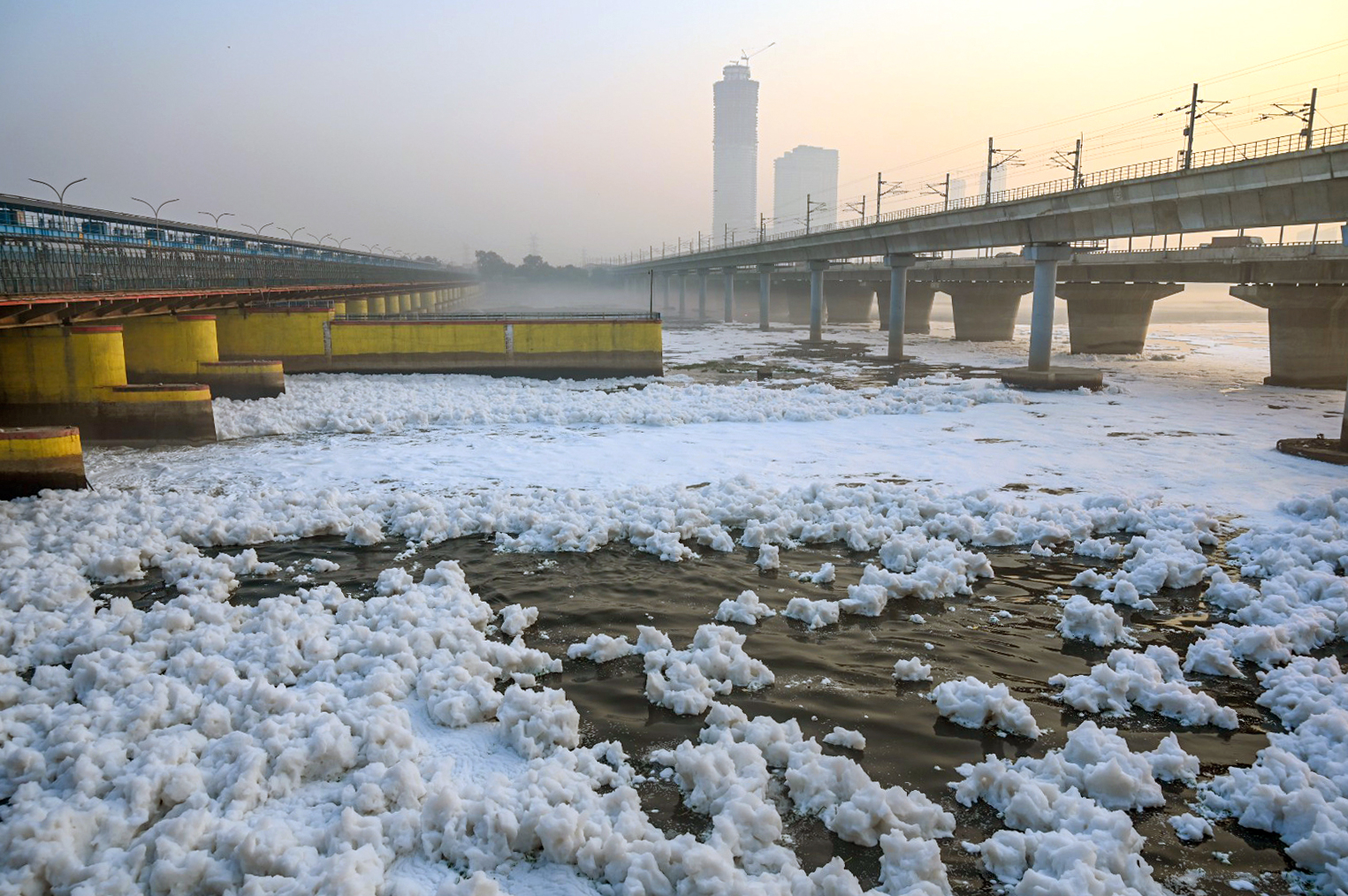
Environmentalist BS Vohra said Yamuna River is ecologically dead, largely due to the unchecked discharge of untreated industrial and domestic waste.
Environmentalist BS Vohra said Yamuna River is ecologically dead, largely due to the unchecked discharge of untreated industrial and domestic waste. (IANS)


He said, overall, ETPs play a key role in reducing pollution, conserving water, and promoting a cleaner, healthier environment.

The environmental expert asserted that the Yamuna River in Delhi is ecologically dead, largely due to the unchecked discharge of untreated industrial and domestic waste. Despite decades of government programs like the Yamuna Action Plan and Namami Gange, pollution levels remain critical, with zero dissolved oxygen, making it uninhabitable for aquatic life.

"Illegal dumping by industries and poor enforcement by agencies like the Delhi Pollution Control Committee (DPCC) have exacerbated the crisis. Delays in establishing effluent and Sewage Treatment Plants (STPs) reflect administrative failure. Without strict regulation, real-time monitoring, and political will, the Yamuna will continue to deteriorate, posing serious environmental and public health risks," he said.

Vohra said, "To address the 1,898 industries lacking mandatory ETPs, the government must enforce strict compliance with environmental laws. This includes imposing fines, shutting down defaulters, and conducting regular inspections. Real-time monitoring and public disclosure of violators will enhance accountability. Financial incentives and support should be offered to smaller industries to set up ETPs or join Common Effluent Treatment Plants (CETPs)."

According to Vohra, strengthening the capacity and accountability of pollution control boards, along with involving third-party audits, is crucial. A combined approach of regulation, technology, and transparency is essential to protect waterbodies and public health, he added.